

Music in worship
Why the Minster offers such a broad musical palette, how choral and contemporary traditions sit together, the choir, the Snetzler organ, and how to take part.
On this page
- Why does the Minster offer such a broad palette of music?
- How do choral and contemporary music sit together?
- What is sung in a service?
- Which hymnal do you use, and how do I follow the music?
- How can I go deeper, on my own?
- Tell me about the Minster Choir
- What about the organ?
- How can I be part of the Minster’s musical life?
Music is for everyone. That is a slightly bolder opening than a guide like this usually gives, but it deserves saying upfront: you do not need to be musical to belong here, and you do not need to be musical to enjoy what we sing.Psalm 150Sung praise has been part of the worship of God since the psalms; the choir and congregation together keep that ancient tradition of offering praise back to God in music.“Praise him with trumpet sound; praise him with lute and harp … Let everything that breathes praise the Lord!”Psalm 150Read the passage →
Why does the Minster offer such a broad palette of music?
We are unusually lucky to have access to a broad palette of musical idioms. That breadth serves two things at once. It serves different preferences — some are at home in the choral tradition, some prefer the contemporary worship music of the 9.15, some are quietest in front of a Taizé chant. It also serves different moods. There are days when what you need is the stillness of Taizé or Compline; days when you need the modern, lyrical register of contemporary worship music — the Coldplay or Adele equivalent in a Common Worship Communion — to put you back in your body; and days when you need the full glorious octane of the Snetzler organ and the Minster Choir at full Sunday strength. The Minster offers all three across the course of a week, and there is no shame in moving between them.
How do choral and contemporary music sit together?
A small explainer for those of us who came to all of this without much musical grounding. The Anglican Church has carried two great musical streams alongside one another for several centuries. The choral tradition descends from the medieval monastic liturgy and is built around setting the words of services and psalms to music — the Magnificat at Evensong, the Sanctus at the Eucharist, the chant for the appointed psalm. It is overwhelmingly designed to be sung by a trained choir on behalf of the whole congregation. The contemporary worship tradition descends from the eighteenth-century evangelical revival and the twentieth-century charismatic movements, and is built around songs that the whole congregation sings together, often led by a band, with the emphasis on direct address to God. Both are theology in music; neither is to be looked down on; both are at home at Beverley Minster.
In practice, that means our 9.15 service has a band, projected words and contemporary songs; our 11.00 has the choir leading sung settings of the liturgy with hymns from across the centuries; and our Evensong is almost entirely choral, with a single hymn for the congregation. None is the “real” music of the Minster. They all are.
What is sung in a service?
Most Anglican services involve some sung text. An introit is a short opening sung piece that sets the atmosphere for worship — usually at the start of Evensong or a Choral Communion, before the spoken liturgy begins. A psalm chant is a short tune to which the verses of a psalm are sung in alternating verses. An anthem is a free-standing piece, usually after the prayers, gathering the themes of the service into music. A setting is the music for the parts of the liturgy the choir takes on behalf of the congregation: the Magnificat and Nunc Dimittis at Evensong, or the Sanctus and Agnus Dei at the Eucharist. The voluntary, often played at the end of a service, is a piece by an organist that allows worship to spill out into ordinary life.
Which hymnal do you use, and how do I follow the music?
At the Minster the hymnal in use at most services is Hymns Old and New. The pews carry the words-only edition; you may wish to obtain a copy of the music edition for your own use if you would find it helpful to follow along.
A second tip from experience: look the hymns and worship songs up on Spotify or YouTube during the week. Most have several recordings; ten minutes of listening will turn an unfamiliar tune into a half-recognised one by Sunday. This works best for the 11.00 and Choral Evensong, whose music is known in advance. The songs at the 9.15 and the chants at Taizé are not set out ahead of time, but the same habit works the other way round: a song you half-caught on Sunday is easy to look up and get to know before you next hear it.
How can I go deeper, on my own?
A few resources that have helped people in the Minster community get under the skin of choral and church music. The Diocese of York’s own choral awards scheme — which Robert leads our choristers through — is the structured route many of our young singers follow; the RSCM (Royal School of Church Music) Voice for Life programme is the national alternative, and well worth knowing. The RSCM Chorister Companion is a good handbook on church music for the curious adult. GCSE and A-level Music revision guides are surprisingly well-written compact introductions to musical form, harmony and history; they will give you the vocabulary that lets you follow what you hear. Apple Classical is a streaming service designed for classical music; search for “The Story of Classical” within the app for a sweeping introduction to where sacred music sits within the wider classical and popular tradition. The BBC Radio 3 podcast Composer of the Week is a slow, civilised education by stealth.
Tell me about the Minster Choir
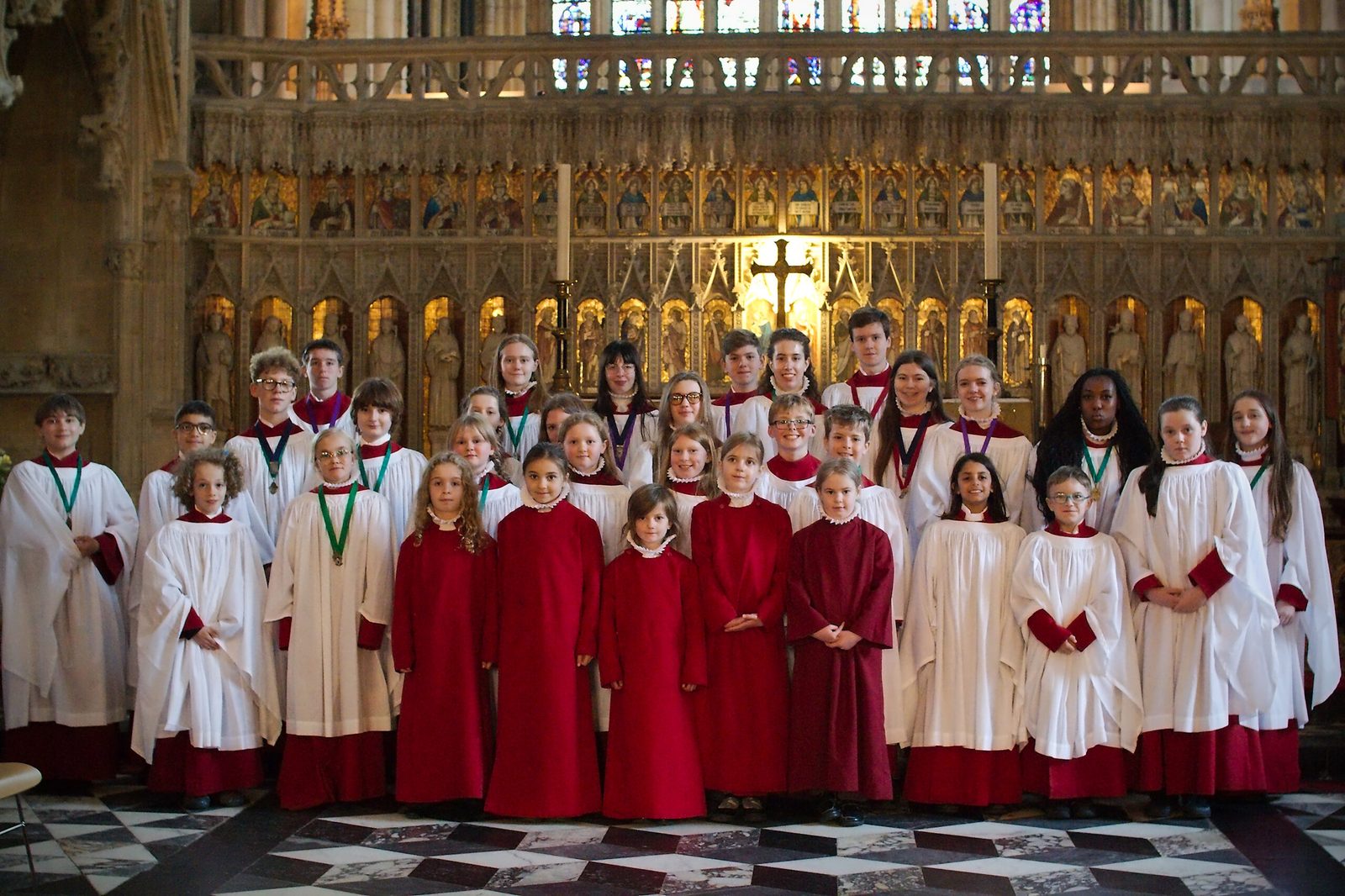
One of the largest parish church choirs in the country — counting the Junior Choir, more than a hundred people sing here. It sings two services on a Sunday and an Evensong on a Thursday, and contributes to special services, recordings, concerts and tours. It comprises separate top lines of Boys’ voices (8+), Girls’ voices (8+), the Consort (girls aged 14 and over) and adult sopranos, supported by a “back row” of altos, tenors and basses. The Junior Choir, for children aged 5 to 8, can be a useful entry point. Membership is free, and Choral Foundation Scholarships, available for choristers aged 8 to 14, provide bursaries of up to 100% towards individual music lessons. Children have been singing in the Minster for more than 800 years.
What about the organ?
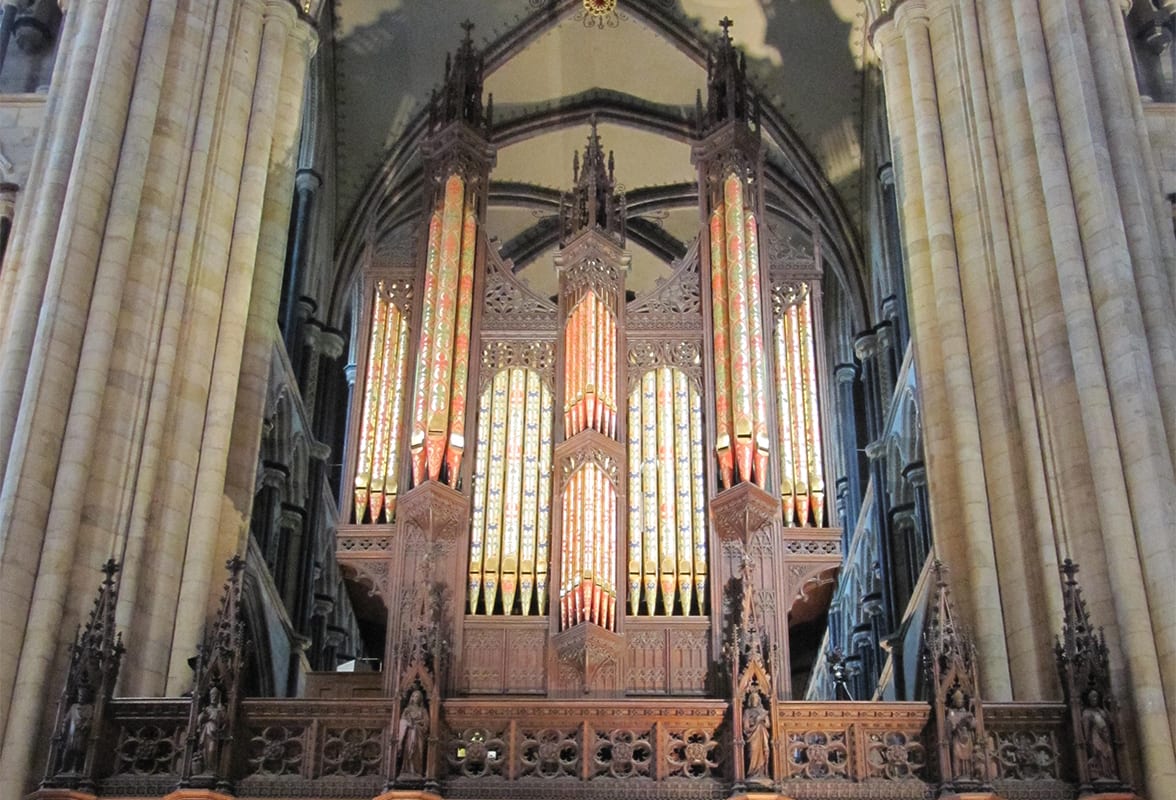
The current organ, by John Snetzler, was installed in 1769 and opened with a great festival of the music of Handel. The instrument has been refurbished several times — most recently in 2015 — but the present organ still contains some of Snetzler’s original equipment and pipes. Over four thousand pipes, four manuals and a pedal board, seventy-five stops. The screen, designed by Sir Gilbert Scott in 1885 and carved locally by James Elwell, is one of the visual focal points of the building.
There is more about the instrument on the Minster’s organ page; its full technical specification is catalogued on the National Pipe Organ Register. For a closer look, there is a video tour of the organ — a climb up among the pipes and mechanism.
How can I be part of the Minster’s musical life?
You do not need to be in the choir, but children who like singing are warmly invited to a voice trial; the contact form is on the Minster website’s choir page, or speak to Robert Poyser, Director of Music, at music@beverleyminster.org.uk. Adults who can read music are also welcome to ask Robert about joining the back row of the Choir, or about joining the worship band that leads the music at the 9.15 service — a separate thing, equally important, and always glad of more musicians. Anyone who simply wants to listen is welcome at Evensong, the Friday lunchtime concerts, the regular organ recitals, and a range of concerts through the year. Robert is unfailingly generous to those who want to deepen their understanding; do not be shy in asking him what to listen for, what to read, what to follow up on.
Section 12 of 26 in the Companion
Discovering more
On the Minster website
Books to explore further
- O Sing unto the Lord: A History of English Church MusicA warm, readable history of the tradition behind the Minster’s music.
- Complete Anglican Hymns Old & NewThe Minster’s own hymn book — the music edition, if you’d like to follow along.
Book links open Waterstones; many titles are also at the Minster shop or your local bookshop.
Other websites
Offered as helpful starting points. These sites are not the Minster’s own, and may not reflect its views or tradition.