

Saint John of Beverley and a brief history
Who Saint John of Beverley was, thirteen centuries of Christian community on this site, the present building’s story, and the Destinations Project.
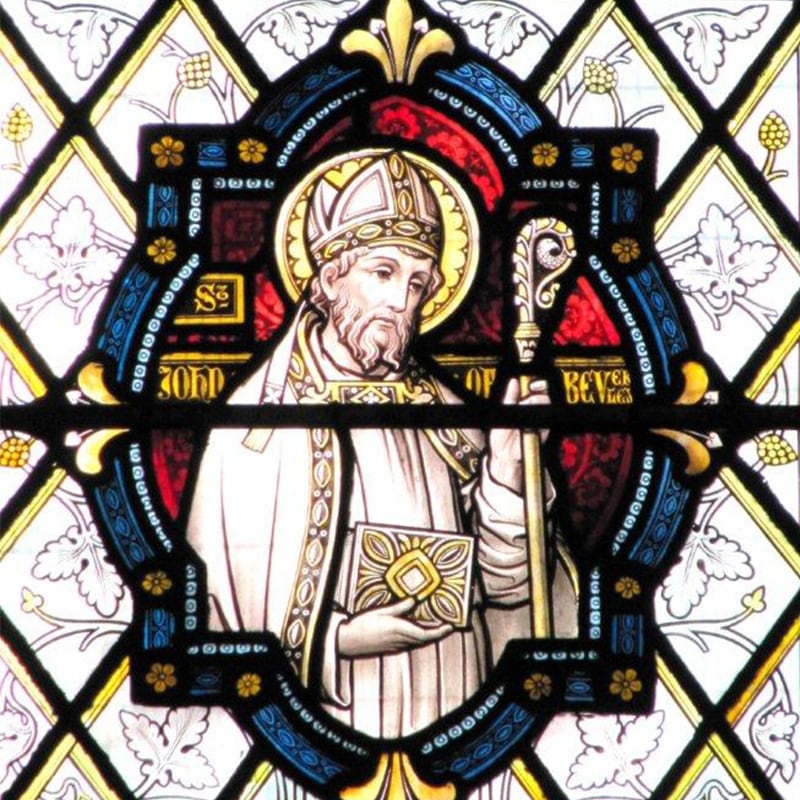
There has been a Christian community on this site for over thirteen hundred years.
Who was Saint John?
John of Beverley was born in the seventh century, in a part of Northumbria that was, at the time, the heart of English Christianity. He was a member of the Whitby community under Abbess Hilda, became Bishop of Hexham in 687 and Bishop of York in 705, and ordained the Venerable Bede. In 714 he retired from his bishopric to a monastery he had founded “in the wood of the men of Deira” — what is now the site of Beverley Minster. He died in 721 and was buried in the Chapel of St Peter on the same site.
Bede, who knew him, recorded several miracles of healing — the most famous of which is the patient teaching of speech to a young man who had been mute from birth. The story has stayed with the Minster: the medal struck for the 1300th anniversary in 2021 shows the moment of the healing.
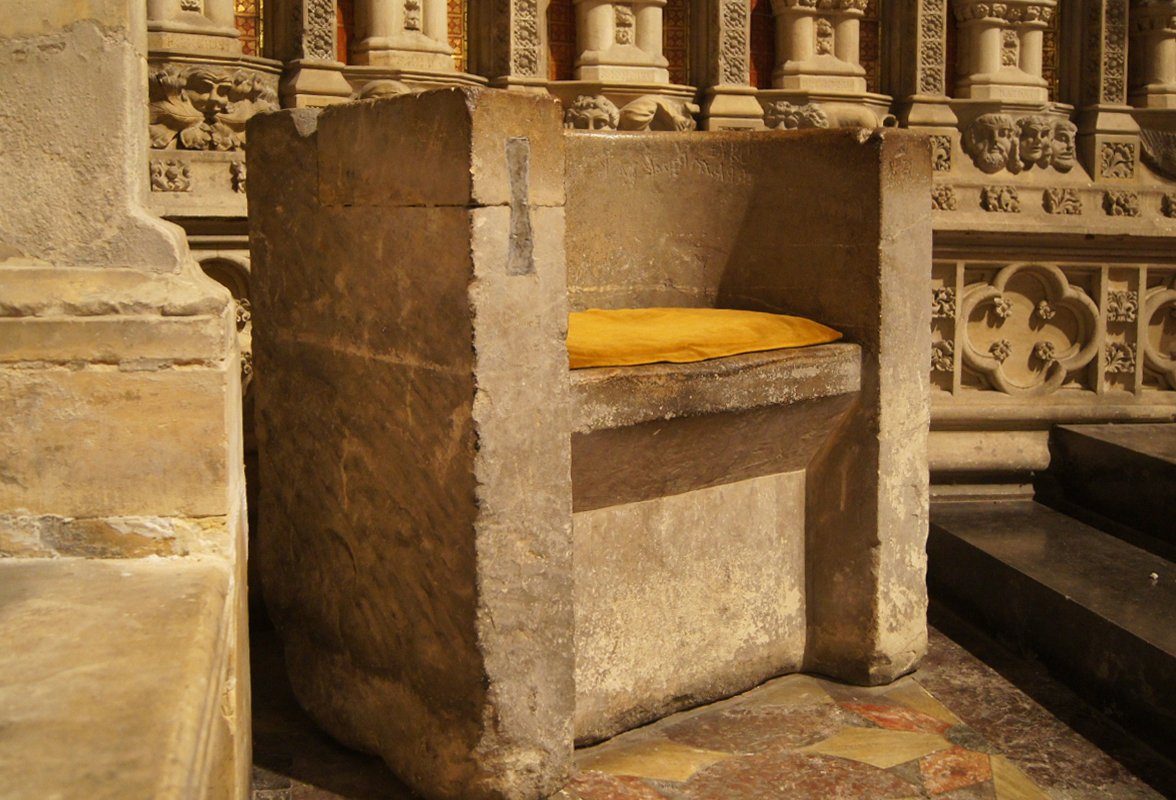
John was formally added to the Canon of Saints in 1037. By that point Beverley had become a place of pilgrimage and a centre of sanctuaryPsalm 46:1Beverley’s ancient right of sanctuary — safety for the fugitive on holy ground — reflects a truth the psalms sing of God himself as the ultimate refuge.“God is our refuge and strength, a very present help in trouble.”Psalm 46:1Read the passage → — the right of fugitives to claim safety on monastic ground, granted to Beverley by King Athelstan in 934 in thanksgiving for his victory at Brunanburgh. The pilgrim economy made Beverley one of the twelve largest towns in England by 1377.
What about the building itself?
The present Minster is the third or fourth church on the site. The first was the Anglo-Saxon monastery; a substantial Norman church followed; that was severely damaged by fire in 1188; the present Gothic building was begun in 1190 and broadly completed by 1420. It contains all three Gothic styles — Early English at the east end, Decorated through the Nave, Perpendicular at the west — combined with a continuity of detail that has made the building widely admired as one of the great Gothic churches of Europe.
After the Reformation, the Minster nearly fell down. The Collegiate Church was suppressed in 1548 and only survived because it was also a parish church; by 1552 a report described it as “in great decay, and in a short space is very likely to fall into utter ruin”. Queen Elizabeth I re-established it as a parish church in 1558 and endowed it with some of the confiscated funds, which became the basis of the “Old Fund” — the Beverley Minster Old Fund of today. Restoration in the eighteenth century, supervised by Nicholas Hawksmoor and the Yorkshire architect William Thornton, saved the north transept (which had begun to lean four feet into the street); restoration in the nineteenth century under Sir Gilbert Scott cleaned the interior and added the present organ screen; the twentieth and twenty-first centuries have continued the pattern of prudent and patient care.
What is the Destinations Project?
The Minster’s most ambitious undertaking for many years — over six million pounds over several years, with about four million sought from the National Lottery Heritage Fund. It will re-lead the Quire and Retro-quire roofs, conserve the medieval glass of the Great East Window, replace the failing lighting system, and develop the Minster’s role as a regional visitor attraction and pilgrimage church. Supported by the Friends of Beverley Minster, the Beverley Minster Old Fund and Two Churches One Town. The project runs in two phases, development and then delivery, each with its own bid to the Heritage Fund; the Minster website carries the latest news.
Section 21 of 26 in the Companion
Discovering more
On the Minster website
Books to explore further
- The Ecclesiastical History of the English PeopleBede’s eighth-century history — our earliest source for Saint John of Beverley himself. Also at East Riding Libraries
Book links open Waterstones; many titles are also at the Minster shop or your local bookshop.
Other websites
Offered as helpful starting points. These sites are not the Minster’s own, and may not reflect its views or tradition.